How Respite Care Can Assist Households Prior To a Transfer To Memory Care
The decision to relocate a loved one into memory care is rarely a single minute. It generally gets here after months, often years, of smaller minutes that gradually accumulate. A failed to remember oven heater. A missed out on medication. A sleep deprived night after a straying episode. A spouse that has become extra tired than they will admit. By the time households start searching for memory care near me, they are usually already working on fumes.
That is where respite care can make a genuine difference. It offers families a time out, not simply from the physical work of caregiving, yet from the psychological pressure that builds when everyday feels immediate. Utilized well, respite care can come to be a bridge between home care and a much safer long-lasting setting. It offers everyone an opportunity to breathe, reassess, and make decisions without the warmth of a situation pushing in.
The space to believe clearly
One of the hardest components of elder care is that decision-making gets entangled up with shame. Families ask themselves whether they are doing enough, whether an action indicates they have stopped working, whether their loved one is "all set" for memory care. Those inquiries are hefty, and they are harder to respond to when no person has slept well for weeks.
Respite care develops some distance from that pressure. Also a few days can change the tone of the conversation. When the caregiving partner or grown-up kid steps back, they frequently see the circumstance extra honestly. It ends up being simpler to notice patterns rather than responding to emergency situations. Maybe the person with dementia appears calmer in a more organized environment. Possibly the family members caretaker understands they have been brushing off their own exhaustion. Maybe siblings that differ lastly see what the key caregiver has been bring all along.
I have actually seen family members make much better choices after a brief respite remain just since they were no more saying from exhaustion. The loved one still required support, yet everyone involved might lastly think past the following 24 hours.
Why respite care issues before memory care
Respite care is usually referred to as a break for caregivers, and that is true. Yet before a change to memory care, it can serve a 2nd feature. It acts like a dry run, showing households what day-to-day live in senior care may in fact look like.
Some older grownups adapt to a brand-new environment more efficiently than their family expected. Others require more assistance than anticipated. Both end results are useful. Households learn what kind of guidance is required, exactly how the person replies to regimens, whether evenings are particularly tough, and what kinds of cues help with meals, bathing, and rest. Those details issue when choosing memory care, since the appropriate community is not practically safety. It has to do with fit.
A respite remain can additionally discover functional truths that are easy to miss out on in the house. Perhaps the individual requires cueing more often than anyone recognized. Possibly they are not consuming enough unless meals are served at predictable times. Perhaps they are extra socially engaged when others initiate discussion. Those are not abstract observations. They are the kinds of realities that shape whether a relocate to memory care feels like a loss, an alleviation, or some combination of both.
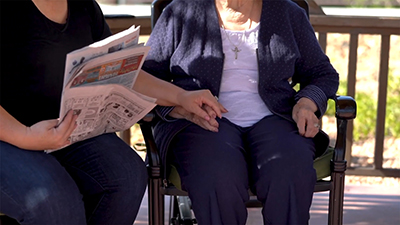
What families commonly see throughout a brief stay
The first 2 days in respite care generally inform families a great deal. The room matters, but the regular issues more. Individuals with dementia commonly respond much better than anticipated when the atmosphere is tranquil and the structure corresponds. That does not indicate the change is uncomplicated. It implies the setup can reveal staminas that were hidden at home, where the day might have been extra chaotic.
Families often see that a loved one starts consuming extra on a regular basis when meals are offered at set times and interruptions are minimized. They may see that nighttime complication decreases when the day includes much more activity and much less napping. They might likewise find that a person who seemed taken out at home is much more going to get involved when team delicately welcome them into discussion or an activity.
At the very same time, respite care can reveal where the rubbing is. Some individuals end up being much more upset in strange settings, particularly if they feel rushed or do not recognize where they are. That is valuable details also. If a short-term keep triggers anxiousness, the family can ask what would aid before a long-term step. It may be lighting, a quieter unit, more individually peace of mind, or a stronger concentrate on tailored routines.
Those monitorings provide households something better than uncertainty. They give a clearer map for the next step.
The caregiver's body maintains score
Family caretakers commonly discuss tension in an unclear means, however the effects are not unclear in any way. They appear as headaches, bad rest, a sensitivity, digestive difficulty, and the weird psychological pins and needles that can creep in when somebody has actually been operating in dilemma mode too long. Individuals that are supplying daily senior care can get made use of to being tired in a way that is not regular and not sustainable.
Respite care disrupts that cycle. Often the benefit is apparent, like a complete evening of sleep. In some cases it is subtler. A spouse might finally most likely to their own medical professional's consultation. A grown-up child may capture up on work they have actually been also distracted to complete. Another member of the family may spend an afternoon with their own children and understand just how much they have missed ordinary life.
That recovery time issues, because the transfer to memory care is not nearly the individual with dementia. It is also regarding the household's capability to remain steady with the shift. A burned-out caregiver may resist choices they know are needed just due to the fact that they do not have the power to face the logistics. A rested caretaker is more probable to ask much better questions, contrast communities thoroughly, and observe the distinctions in between one setup and another.
Respite care as a useful outfit rehearsal
Families in some cases picture that a relocation into memory care will certainly be obvious when the time comes. In truth, it is generally a collection of small signals as opposed to one dramatic event. Respite care aids test those signals in a lower-stakes setting.
A short stay can respond to concerns that matter later. Does the individual do far better with an exclusive area or in a setup with more social activity nearby? Do they need help initiating showers, or do they stand up to due to the fact that the strategy feels sudden? Are early mornings calmer than mid-days? Does sundowning come to be a lot more convenient with a predictable routine? These details can form the design of a successful move.
That type of information is particularly helpful when families are contrasting senior living near me options and attempting to determine what degree of assistance is reasonable. Some areas are better suited to citizens that need constant redirection. Others are solid on social programming but not also matched for individuals with sophisticated cognitive decrease. A respite keep can aid families type with those differences prior to making a long-lasting commitment.
It likewise provides the older adult a chance to experience assistance without immediately facing the psychological weight of "this is permanently." That distinction matters. Short-term care can really feel much less harmful, and that decreased pressure frequently leads to a truer photo of just how the person may adapt.
A safer way to have the challenging conversation
Many families postpone chatting openly regarding memory care due to the fact that they fear the conversation will distress their loved one. That anxiety is easy to understand. Nobody intends to state something that seems like surrender. However avoiding the concern does not make it easier.
Respite care can soften the discussion. Instead of mounting the relocation as a final loss of freedom, families can describe the respite remain as a brief duration of help and remainder. If the individual does well, the family has a concrete example to point to. If the person battles, that experience can be reviewed with more concern and less speculation.
The conversation is often less complicated when secured in observed needs instead of abstract worry. Claiming "You seemed much more comfy when somebody was nearby to assist with meals" lands in different ways than stating "We believe you need memory care." The initial declaration is about lived fact. The secondly can trigger defensiveness prior to the individual has a possibility to listen to the reasoning.
In my experience, family members do best when they talk simply yet not medically. The goal is not to win an argument. The objective is to aid every person recognize what degree of assistance is in fact needed.
When respite care is the appropriate move
Not every household needs respite care prior to a relocate to memory care, however many benefit from it. The timing matters. It is particularly useful when the family members caretaker is depleted, when the person with dementia is becoming harder to protect, or when siblings are divided about next steps.
There are likewise moments when respite respite care care works as a fact check. If a loved one has actually started roaming, refusing dishes, mishandling medication, or becoming a lot more disoriented at night, a temporary keep can reveal whether home care still has space to function or whether a memory care setup would supply a much better degree of assistance. If the family members has been trying to stretch home care one more month, respite can expose whether that month is realistic or hopeful.
A few scenarios have a tendency to make respite care specifically valuable:
- The primary caregiver is revealing clear indicators of burnout.
- The loved one needs more guidance than the family members can securely supply at home.
- The household is taking into consideration memory care however wants a transition duration first.
- Siblings differ and require shared, concrete observations.
- The older grownup would certainly gain from evaluating an organized environment prior to a permanent move.
That is not an exhaustive list, but it catches the moments when respite care has a tendency to offer one of the most value.
What to ask when looking for support
Finding the ideal respite care or memory care community is not nearly schedule. It is about the day-to-day feel of the area. Families commonly focus on layout and brochures, yet the crucial inquiries are extra based. Just how do staff reroute a person that is perplexed? What happens if a resident becomes anxious in the evening? Just how is personal care managed when someone stands up to help? How much uniformity do caregivers have from change to shift?
If you are contrasting memory care near me options, ask to see the regular at work, not simply the usual areas. Notification whether the staff speaks with locals with perseverance and warmth, or with a rushed tone. View whether people are involved or merely supervised. The difference is simple to find once you recognize to look.
It also aids to ask how respite care is coordinated with longer-term support. Some senior care neighborhoods are well equipped to handle both brief remains and long-term steps, which makes the transition smoother. Others may supply respite just under particular situations or with minimal staffing patterns. Understanding that beforehand can prevent a hurried decision later.
Families must likewise inquire about personal items, medicine monitoring, and how personnel find out an individual's practices and choices. Small details issue. A familiar blanket, a favored bedtime regimen, or the appropriate snack at the right time can make a new setup really feel much less foreign.
The psychological side of moving from home to memory care
There is no clean psychological manuscript for this change. Alleviation can exist appropriate along with despair. A family members can recognize a step is necessary and still really feel heartbroken about it. The individual with dementia might appear content one hour and resistant the next. Caregivers might second-guess themselves even after months of aggravating symptoms.
Respite care does not remove that discomfort, however it can make it a lot more convenient. It offers family members an opportunity to recognize the loss of the old routine while additionally seeing that safety and comfort are feasible in a different setup. For several households, the hardest component is not choosing memory care. It is approving that love occasionally indicates changing form.
A short-term remain can aid reframe that change. The household sees that the relationship does not disappear when caregiving changes hands. Visits can come to be calmer. Conversations can become much more existing. There might be less time invested remedying, coaxing, or worrying about the following dilemma. That can feel weird in the beginning, yet it frequently unlocks to a various type of closeness.
A change that secures everyone involved
The ideal relocations right into memory care are seldom made at the last feasible min. They take place when households still have sufficient ability to choose thoughtfully, as opposed to respond under stress. Respite care can protect that ability. It buys time for remainder, monitoring, preparation, and honest conversation.
It also secures the person with dementia from the turbulence that typically includes delayed decisions. A step made after duplicated crises is harder on everybody. A move made after a duration of respite is typically steadier due to the fact that the family has already learned what support actually helps. They have seen what the person requires in an organized setting. They have had time to contrast neighborhoods, ask questions, and look past surface area impressions.
That is the real worth of respite care prior to memory care. It is not just a break, though it absolutely is that. It is a way to relocate from unpredictability toward educated action, from raw fatigue towards a plan that can be dealt with. For households searching for elder care that feels both caring and sensible, that pause can alter everything.
Business Name: BeeHive Homes of Four Hills
Address: 13450 Wenonah Ave SE, Albuquerque, NM 87123
Phone: (505) 221-6400
BeeHive Homes of Four Hills
Beehive Homes assisted living care is ideal for those who value their independence but require help with some of the activities of daily living. Residents enjoy 24-hour support, private bedrooms with baths, medication monitoring, home-cooked meals, housekeeping and laundry services, social activities and outings, and daily physical and mental exercise opportunities. Beehive Homes memory care services accommodates the growing number of seniors affected by memory loss and dementia. Beehive Homes offers respite (short-term) care for your loved one should the need arise. Whether help is needed after a surgery or illness, for vacation coverage, or just a break from the routine, respite care provides you peace of mind for any length of stay.
13450 Wenonah Ave SE, Albuquerque, NM 87123
Business Hours
BeeHive Homes of Four Hills provides assisted living care
BeeHive Homes of Four Hills provides memory care services
BeeHive Homes of Four Hills provides respite care services
BeeHive Homes of Four Hills supports assistance with bathing and grooming
BeeHive Homes of Four Hills offers private bedrooms with private bathrooms
BeeHive Homes of Four Hills provides medication monitoring and documentation
BeeHive Homes of Four Hills serves dietitian-approved meals
BeeHive Homes of Four Hills provides housekeeping services
BeeHive Homes of Four Hills provides laundry services
BeeHive Homes of Four Hills offers community dining and social engagement activities
BeeHive Homes of Four Hills features life enrichment activities
BeeHive Homes of Four Hills supports personal care assistance during meals and daily routines
BeeHive Homes of Four Hills promotes frequent physical and mental exercise opportunities
BeeHive Homes of Four Hills provides a home-like residential environment
BeeHive Homes of Four Hills creates customized care plans as residents’ needs change
BeeHive Homes of Four Hills assesses individual resident care needs
BeeHive Homes of Four Hills accepts private pay and long-term care insurance
BeeHive Homes of Four Hills assists qualified veterans with Aid and Attendance benefits
BeeHive Homes of Four Hills encourages meaningful resident-to-staff relationships
BeeHive Homes of Four Hills delivers compassionate, attentive senior care focused on dignity and comfort
BeeHive Homes of Four Hills has a phone number of (505) 221-6400
BeeHive Homes of Four Hills has an address of 13450 Wenonah Ave SE, Albuquerque, NM 87123
BeeHive Homes of Four Hills has a website https://beehivehomes.com/locations/four-hills/
BeeHive Homes of Four Hills has Google Maps listing https://maps.app.goo.gl/32p1Aa3RPZqoYGBS7
BeeHive Homes of Four Hills has TikTok page https://www.tiktok.com/@beehive4hills
BeeHive Homes of Four Hills has an YouTube page https://www.youtube.com/@WelcomeHomeBeeHiveHomes
BeeHive Homes of Four Hills has Facebook page https://www.facebook.com/beehivehomesoffourhills
BeeHive Homes of Four Hills has Instagram page https://www.instagram.com/beehivehomesfourhills/
BeeHive Homes of Four Hills won Top Assisted Living Homes 2025
BeeHive Homes of Four Hills earned Best Customer Service Award 2024
BeeHive Homes of Four Hills placed 1st for New Mexico Senior Living Communities 2025
People Also Ask about BeeHive Homes of Four Hills
What is BeeHive Homes of Four Hills Living monthly room rate?
The rate depends on the level of care that is needed. We do a pre-admission evaluation for each resident to determine the level of care needed. The monthly rate is based on this evaluation. There are no hidden costs or fees
Can residents stay in BeeHive Homes of Four Hills until the end of their life?
Usually yes. There are exceptions, such as when there are safety issues with the resident, or they need 24 hour skilled nursing services
Do we have a nurse on staff?
No, but each BeeHive Home has a consulting Nurse available 24 – 7. if nursing services are needed, a doctor can order home health to come into the home
What are BeeHive Homes of Four Hills's visiting hours?
Visiting hours are adjusted to accommodate the families and the resident’s needs… just not too early or too late
Do we have couple’s rooms available?
Yes, each home has rooms designed to accommodate couples. Please ask about the availability of these rooms
Where is BeeHive Homes of Four Hills located?
BeeHive Homes of Four Hills is conveniently located at 13450 Wenonah Ave SE, Albuquerque, NM 87123. You can easily find directions on Google Maps or call at (505) 221-6400 Monday through Sunday 9:00am to 5:00pm
How can I contact BeeHive Homes of Four Hills?
You can contact BeeHive Homes of Four Hills by phone at: (505) 221-6400, visit their website at https://beehivehomes.com/locations/four-hills/ or connect on social media via TikTok Facebook or YouTube
Visiting the Loma del Norte Park offers accessible green space that supports assisted living and memory care residents during senior care and respite care visits.